
Chattahoochee County Busted Mugshots
A mugshot is just a photo taken at booking. Its only job is identification. The booking record behind it can say much more. It may carry the name given at intake, the arresting agency, the charges as first logged, bond details, and any later court activity. In Chattahoochee County, though, none of this appears on a public roster. The sheriff's office holds the records but posts no inmate search, no bookings page, no online list of names. So a person can have a booking record on file while nothing about them surfaces in a county search.
After an arrest, the file passes through many hands. Intake comes first. Then identification and the booking record, the photograph, custody or transfer, and finally a court case. Each step may sit with a different custodian. The sheriff keeps the booking packet, a receiving facility tracks current custody, and the clerk of court holds the calendar and case outcomes. Sentenced state prisoners belong to the Georgia Department of Corrections, not the county. Federal and immigration systems play by their own rules entirely.
What a booking entry shows. A Chattahoochee County mugshot marks one moment in the process, the day someone was booked into the county jail.
Chattahoochee County Booking Record Fields
The county has no public results screen. That means no fixed field list to copy. What you can do is request the booking packet and photograph through the sheriff's Open Records form. What comes back may differ. It depends on the agency, the date, the custody arrangement, and what the law lets be redacted. So treat the fields below as a vocabulary for a precise request, not a promise of what arrives. Naming the right elements still helps the custodian find the event you mean.
| Record element | What it can show |
|---|---|
| Full name and aliases | The identity used during intake, which should be checked against other identifiers. |
| Booking or arrest date and time | When the intake event was recorded, not when the case was decided. |
| Booking, incident, case, OTN, or CTN number | An identifier that can connect the agency record to a prosecutor or court file. |
| Arresting agency | The agency that made or processed the arrest, which may differ from the custody facility. |
| Charges as booked | The charges entered at intake. They are not a conviction and can later change. |
| Bond amount, type, and status | A release condition at a point in time that can change by court order. |
| Booking photograph | An identification image, if created and held by the responsible agency. |
| Fingerprints or descriptors | Identification data that may be controlled or redacted under a separate rule. |
| Facility or custody location | Where the person was held at the recorded time. A transfer can make it stale. |
| Release or transfer entry | A custody change. A past booking can remain after release. |
| Court or hearing information | A next event or case reference that should be confirmed with the clerk. |
| Redactions or withheld material | Protected details such as juvenile, victim, medical, sealed, or security information. |
The request form itself asks for a lot of inputs: contact details, document categories, case numbers, an incident date or range, call type or time, phone, location, pending-court information, and other identifiers. Don't confuse the two lists. Those items are what the custodian uses to search. They are not fields guaranteed to appear in the booking record you get back.
How to Get Chattahoochee County Mugshots
Start with the Chattahoochee County Sheriff's Office Open Records form. For an intake photo, select "Photographs." Use the "Other" option to describe the booking sheet, arrest or incident record, bond or release information, or transfer record you want with it. The more you can narrow things down, the better. A tight date range, full name, alias, arresting agency, location, and case or incident number all cut down on mistaken matches.
CCSO promises a response within three business days, including an estimated completion time and cost. That is a response promise, not a delivery deadline for the photo itself. The posted pickup address is 377 Broad Street in Cusseta. Note that the state jail directory lists 379 Broad Street for the facility, so confirm the right address with the sheriff before you drive over.
This form works for retained records whether the person is still held or already released. It is not an emergency locator, and it shouldn't be used as one. Need current custody? Call first. Need a state-prison photo? Go through GDC. Need a final case result? That's the clerk's job. Keeping these tasks separate saves everyone from asking one office to certify facts that belong to another. The form page itself is the clearest official picture of what request categories exist, and it stands in nicely for a roster the county never built.
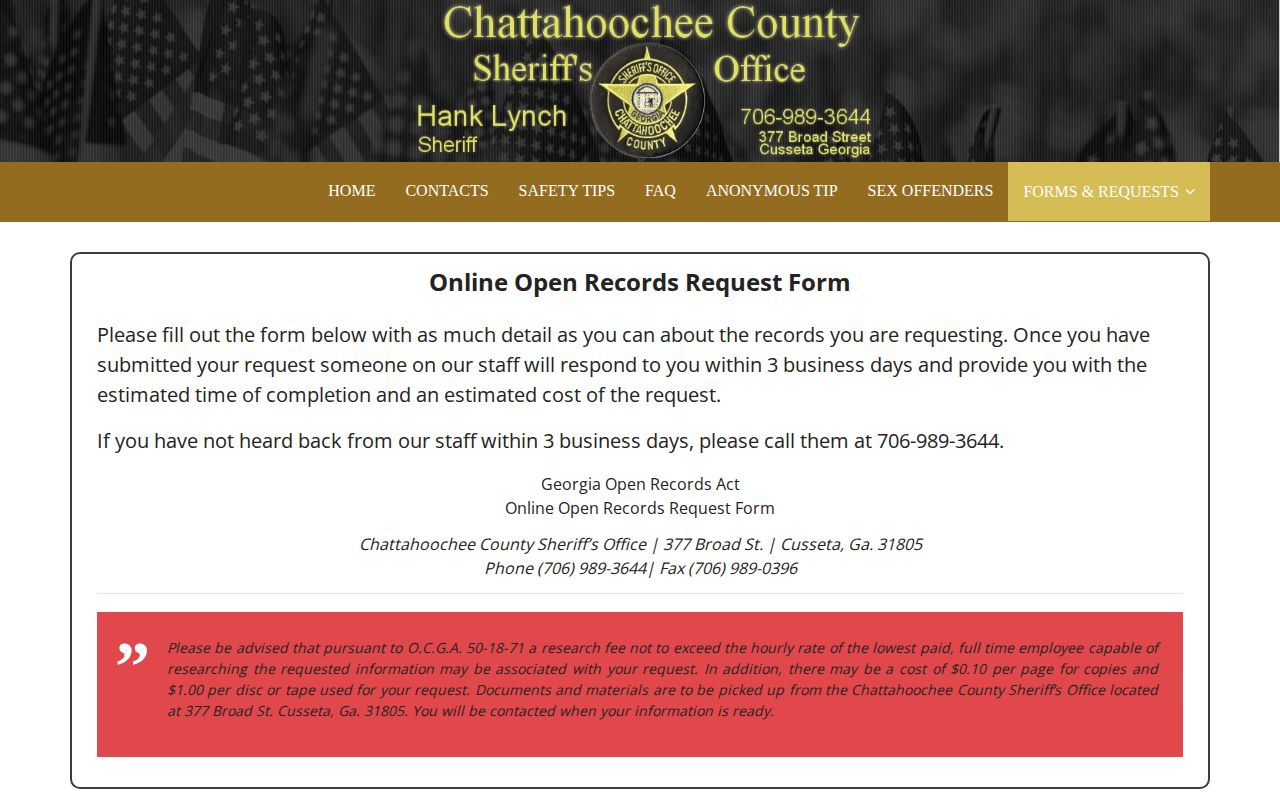
This is why a focused request matters. Ask for the photo and the booking packet together. That gives the custodian enough context to find the right event. A copy floating around the web proves nothing on its own.
CCSO records contact
Chattahoochee County Sheriff's Office
377 Broad Street
Cusseta, GA 31805
706-989-3644
Records line and main contact. Listed business hours run 8:00 a.m. to 4:30 p.m., with no days specified.
- Confirm the arresting agency, full name, and approximate date. Ask CCSO where the person was booked or is currently held.
- Open the sheriff's request form and choose “Photographs” plus “Other” for the related booking record.
- Describe the date range, location, case or incident number, arresting agency, and any known identifier.
- Read the current booking-photograph affirmation required by Georgia law and submit the request truthfully.
- Review the cost and completion estimate. Ask for redacted portions and the legal basis for any withholding.
Georgia Archives schedules set a ten-year floor. That runs from release, and it covers jail booking records. The rule governs storage, not online display. The schedule says nothing about still photographs on their own, so treat a photo as associated booking data only as a possible reading, and ask CCSO which record series applies.
Chattahoochee County Open Records Costs
CCSO posts unusually clear request terms. There is no fixed booking-photo price, though. Staff will answer within three business days with an estimated completion time and cost. Research and retrieval are billed at no more than the hourly rate of the lowest-paid full-time employee able to do the work. Copies run ten cents per page. A disc or tape costs one dollar.
State law fills in the rest. Georgia's Open Records Act, O.C.G.A. § 50-18-71, allows a reasonable search and retrieval charge after the initial no-charge period, plus ordinary copy or media costs. The Georgia Attorney General's Open Government guidance walks through how responses, exemptions, and fees fit together. Before you authorize anything requiring deep research, ask for an itemized estimate. The local form lists no separate photo fee, no mailing fee, and no guarantee of electronic delivery.
Estimates are not answers. An estimate is just a quote. It tells you what the office expects to spend on the search. That includes locating files and getting them ready. Nothing more. The estimate does not confirm that the record exists, and it does not promise the files will ever be handed over.
Hit a wall? Push back politely. When an office withholds something, ask which Code section it relies on and whether any part can be split out and released. Redacting one protected field is common. That single redaction does not shut down the whole booking packet, so the rest may still be available to you.
Georgia Mugshot and Record Law
Georgia law starts from a simple premise: records are open unless something specific closes them. Exemptions and court orders still matter. Juvenile files, victim details, medical data, security material, records tied to a live investigation, and sealed or restricted files can all be withheld or redacted. A good custodian names the legal basis rather than promising a clean, unredacted copy.
Booking photographs get their own statute. O.C.G.A. § 35-1-19 limits when an arresting agency can post them on its own website, with listed exceptions for law-enforcement, registry, and administrative uses. It also restricts how an agency answers a request when the photo might land on a site that charges for removal. The requester may have to supply a statutory affirmation. The Georgia intake-photo rule adds a separate layer, allowing identifying photos to be created and sent for covered arrests. Creating an image is not the same as posting it.
Then there are commercial mugshot sites. O.C.G.A. § 10-1-393.5 governs removal requests in qualifying cases and requires a free response once the request and proof satisfy the law. Read the statutory text and the Georgia Consumer Protection Division explanation side by side. A legitimate news story sits outside this process. It is not a commercial archive.
Restriction runs on its own track. Start with the Georgia Bureau of Investigation record-restriction guidance. For arrests after July 1, 2013, the prosecutor usually comes first; older cases take a longer multi-part route. Keep the pieces straight: restriction, court sealing, agency correction, commercial-site removal, and search-result cleanup are all separate actions.
- Correct an official factual error through the office that created the record, starting with the preparing deputy when CCSO's FAQ directs that route.
- Check the case disposition and restriction eligibility with the prosecutor, clerk, or counsel before asking a private copy to change.
- Use a verified publisher's free policy when the documented outcome qualifies. Mugshots.com lists a free update or removal process at its site policies, and Busted Newspaper lists a free documented-outcome form at its removal page.
- Keep the request, proof of delivery, court document, and response. Do not pay a third party to perform a request that Georgia law or a publisher's policy says should be free.
- After a lawful source page changes, use the search engine's official outdated-content process to refresh a result. A search engine normally cannot erase a still-live lawful source.
A later dismissal, acquittal, amendment, or conviction on a different count belongs in the court record, not in a simplified photo caption.
When Do Chattahoochee County Busted Photos Appear?
Chattahoochee County makes no online timing promise. None at all. CCSO posts no roster, no new-bookings page, and no photo schedule of any kind. Georgia Rule 140-2-.04 can require a qualifying arresting or custodial agency to capture identifying information, photograph included. That requirement stops at capture. It never forces the image onto a county web page.
Here is why the distinction matters. A photo can sit in an agency file forever while never surfacing in a single search result. For anyone in custody now, call CCSO and the confirmed receiving facility. For an older image, name the specific booking event on the sheriff's Open Records form. Waiting around for a web posting will get you nothing.
What if the person was released? Release can switch off a live custody display, though this county has no public display window to follow in the first place. A booking record may still exist and can be requested, subject to exemptions, restriction, and retention rules.
Why Georgia Mugshot Photos Stay Offline
Why does a small county take booking photos yet run no public mugshot page? Georgia's rules explain much of it. O.C.G.A. § 35-1-19 generally bars an arresting agency from publishing these images on its own site and conditions some responses when the requester might feed the photo to a pay-for-removal publisher. The law targets agency publication and certain requests. It does not declare every image a secret.
So a missing CCSO roster proves nothing in either direction. It does not show that no photo was taken. It also does not mean a photo must be handed over. Access still depends on the Open Records Act, juvenile confidentiality, active-investigation exemptions, protected personal data, court restriction, and seal orders. When a protected field can be peeled away from the rest, ask for a redacted version.
Put plainly: an intake photo may exist for a qualifying arrest, and the county offers no official online display of it. The responsible agency decides, under current law, what it can produce.
Chattahoochee County Jail History and Modern Files
Chattahoochee County has an interesting jail past. History will not answer a custody question today, though. The Old Chattahoochee County Jail, built in 1902, still stands as a two-story brick structure with original iron cellwork and Romanesque touches. Local accounts say it stayed in use until 1975. None of that makes it a booking desk, a holding facility, or a digital archive.
Modern files take a different path. Ask CCSO first whether an old booking file remains in its custody, was destroyed under an approved schedule, or moved elsewhere. Georgia Archives finding aids and reference staff only become useful once a custodian confirms a transfer or accession. A historic newspaper story adds color, but it is not the agency's booking packet, and old clippings sometimes repeat claims no court ever tested.
The lesson applies directly to old Chattahoochee County mugshots. A surviving building, a clipping, or a private collection cannot tell you where records sit now, how a case ended, or whether every photo tied to a name is genuine.
How to Find Chattahoochee County Busted Mugshots
Name the right agency first. Chattahoochee search results get muddy fast. Cusseta, Fort Moore, a Chattahoochee town in Florida, and Chattahoochee Hills in another Georgia county all crowd the page. Pin down the arresting agency and the date before anything else. The sheriff's own page and the jail that received the person will take you further than any directory that just borrows the county name.
- Identify whether CCSO, another Georgia agency, military authorities, or a federal agency made the arrest.
- Call CCSO at 706-989-3644 and ask whether the person was booked locally, where the person is currently housed, and which custodian holds the booking record.
- Submit the Open Records form for “Photographs” and “Other,” naming the person, date range, location, arresting agency, and case or incident number.
- Use the Chattahoochee clerk's calendar or the official court-access route for the case that followed booking.
- Use the GDC Offender Search only when the person has entered Georgia state corrections or the available facts point to a state sentence.
- Use BOP or ICE only when federal or immigration custody is the actual question. BOP does not publish public inmate photographs.
- Use news and private archives as leads, then verify current custody with the agency and final outcome with the court.
Warrants are a different problem. With no public warrant portal in this county, the Sheriff's Most Wanted page is the safety-focused alternative, and it exists for exactly that purpose. Treat it as a lead, not a warrant list. Questions about an actual warrant belong with the court or a lawyer.
Where Chattahoochee County Mugshots Appear
No single official source follows a person through every stage of custody. A booking request, a custody location, a state-prison profile, a court result, and federal or immigration holding each sit in a different place. The table lays out those paths side by side. It also flags where local news coverage stops and where private archives fall short.
| Channel | Photo? | Status and access |
|---|---|---|
| CCSO Open Records | Request may include a photo | Official agency route for a booking packet and image, subject to the current law and exemptions. Use the request form. |
| Confirmed receiving facility | Unknown | Call CCSO to identify the present custody agency before relying on another roster. |
| GDC Offender Search | A profile may include one | Official state-corrections route for sentenced state prisoners, not a recent county booking. |
| Chattahoochee clerk and court file | Not a booking-photo gallery | Official path for calendars, case documents, and disposition. The court-access directory is at Georgia Courts e-access. |
| BOP Inmate Locator | No public photograph | Official federal custody locator, not a county booking source. |
| ICE Online Detainee Locator | No mugshot gallery | Official immigration-custody search when the person is in an eligible ICE custody record. |
| WTVM Crime | Sometimes, selectively | Regional incident reporting, not a complete or current county booking feed. |
| Mugshots.com county page | Photo-led archive | Unofficial and potentially stale. Its county archive count is not an arrest total or current-custody count. |
| Other major aggregator pages | No verified local page | No Chattahoochee County, Georgia section was found for Busted Newspaper, Recently Booked, Arrests.org, or Mugshots.zone during the research check. |
One private page carries the county's name. Treat it only as a lead to check out. Its archive can hold old entries or mislabeled records. It carries none of the weight of a sheriff's file or a court record. The page at Mugshots.com appears here strictly as an unofficial archive reference. It is not a local roster.
Busted and Booked Without a Public Roster
Here is the plain answer: the county has no official online roster. CCSO's published pages show no inmate query. No jail roster, no name or booking search, no photo results. There is not even a stated rule on how long anything stays posted. So no official field structure exists to copy. A private site using the county name cannot fill that void, especially when its own facility claims disagree with each other.
| Roster search field | Official Chattahoochee County status |
|---|---|
| Name or alias | No county web form found. Give the name to CCSO by phone or request. |
| Booking number or case number | No public search box found. Include any identifier in the Open Records form. |
| Booking or arrest date | No county results window found. Use a narrow date range in the request. |
| Photo result | No official roster photo displays. Request “Photographs” from the custodian. |
| Release or transfer status | No online persistence rule. Confirm current custody with CCSO and the receiving facility. |
The fallback path has three steps. Call CCSO and ask which facility received the person. If that facility runs its own locator, use it. Then request the retained booking record or photograph from whichever custodian holds it. One more dead end: no sheriff app turned up for iOS or Android, and no verified official social channel posts booking photos.
- Ask CCSO whether the name and date match a local booking and where the person is now held.
- Use only the confirmed facility's official custody tool, if that agency provides one.
- File the sheriff's Open Records request for the historical booking packet or image.
Roster versus record. A live roster tells you who is in custody right now. A retained booking file tells you what got written down at intake. Chattahoochee County publishes the first kind nowhere online. The second kind may still exist, though, and a request to the custodian can reach it.
Who Was Busted Recently in Chattahoochee?
No same-day, 24-hour, 48-hour, 72-hour, weekly, or longer bookings view exists here. CCSO posts no arrest-news stream. Cusseta has no separate police bulletin. A regional news story may surface when something big happens. But news value, not a booking feed, drives that coverage. It will never account for every arrest.
Feed windows. Same-day feed: CCSO does not publish one. Multi-day blotter: neither CCSO nor a separate Cusseta police department publishes one. Archive: no sheriff web archive exists. The workable fallback is to confirm the receiving facility by phone, then request the record straight from the custodian.
The clerk's calendar is a court signal, not an arrest log. After booking, it can show a hearing, case style, counts, bond terms, or counsel. WTVM and the Ledger-Enquirer cover selected incidents and court matters across the region. News value drives what they pick. Missing coverage proves nothing about whether an arrest happened. No weekend surge or multi-day claims can be made here. The county supplies no feed window or source data at all. And a date printed on an article is not a booking date unless the agency's own record says so.
Busted, Released, or Sentenced Records
A booking record and a custody result answer different questions. There is no live roster here. So call the agency and confirm the receiving facility first when you are looking for someone just booked. After a release, the live display can end. The booking packet stays on file, though, subject to retention rules and lawful access. A state sentence moves the person into GDC's separate system entirely.
| Custody stage | Best starting source | What it can establish |
|---|---|---|
| Just booked or in local custody | CCSO, then the confirmed receiving facility | Who booked the person and where the person may be held now. |
| Released from local custody | CCSO Open Records and the clerk | A retained booking record or photo request, plus later court activity. |
| Sentenced to Georgia state corrections | GDC Offender Search | A state-corrections profile that may include a later photo and status. |
| Federal or immigration custody | BOP or ICE locator | The separate federal or immigration custody slice, not a county disposition. |
Finding someone in one system, or not finding them, settles nothing by itself. Match each source to the right custody stage. Then verify the court outcome on its own.
Georgia Department of Corrections Mugshot Lookup
The Georgia Department of Corrections Offender Search belongs to a later custody stage. Use it after sentencing into state corrections. It also works when solid facts point to a GDC record. It is not a Chattahoochee County arrest feed. An empty result there says nothing about whether a new county arrestee is in custody.
Search the form by GDC number or name. Add descriptive details to separate people who share a name. The state ID is the strongest match. A profile can show a photo, an institution, sentence or offense data, and status. Those fields describe the state-corrections record only; they do not rebuild the original county booking. The GDC form keeps the state slice cleanly apart from the county record path.
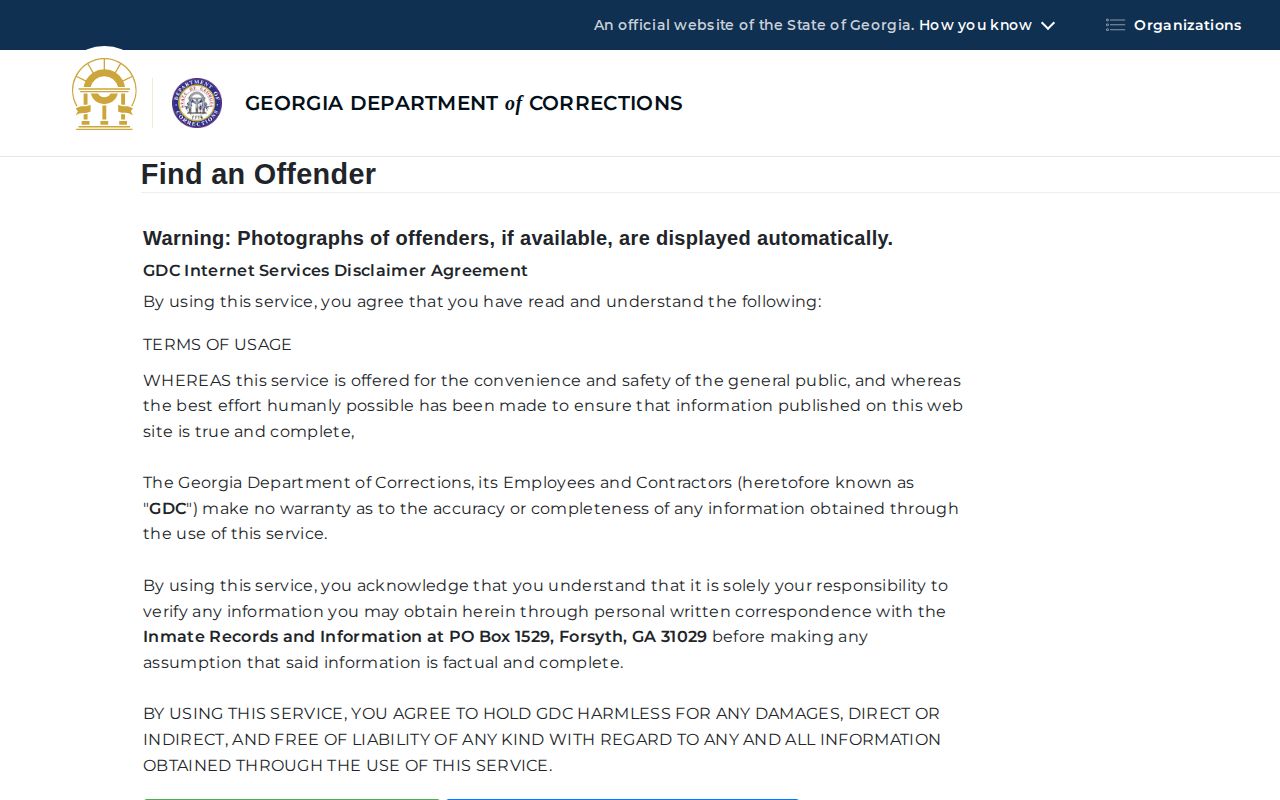
A GDC result can serve as a solid later-stage record. Need a missing historical photo? Follow GDC's records instructions for that or the underlying state file. Identify the person by state ID whenever you can.
Chattahoochee Jail Data Conflicts
Where does Chattahoochee County actually hold arrestees? The paperwork disagrees with itself. The GDC directory names a Chattahoochee County Jail at 379 Broad Street. Yet Georgia Department of Community Affairs reports from 2019 and 2021 mark the county as having no jail at all, and a 2020 county catalog says jail service comes from another government. Each source was compiled for its own purpose and its own moment. None of them, standing alone, tells you where a person arrested today would physically sit.
Treat the directory entry as evidence of how the state labels the facility, nothing more. It will not find a specific person for you.
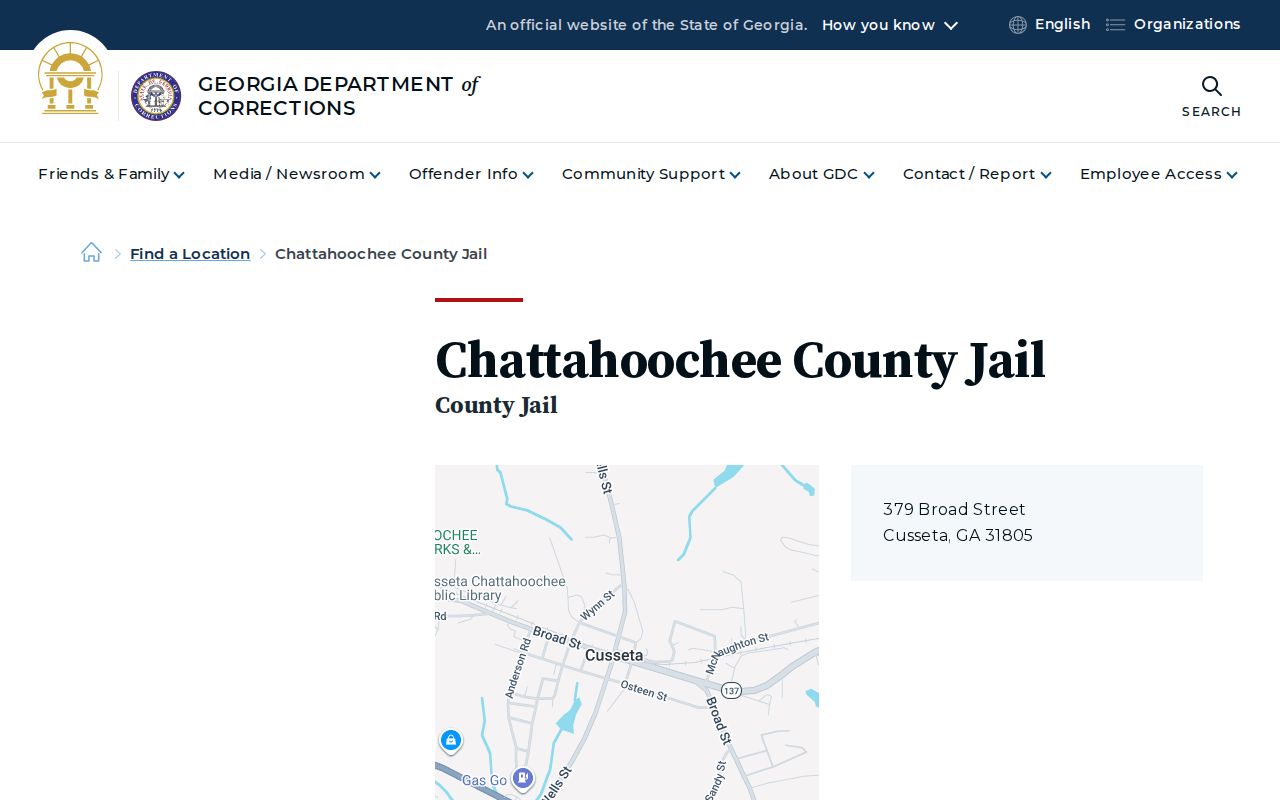
Before trusting any address as the booking desk, check it against the sheriff's office. A private directory points toward Muscogee County while also printing generic Chattahoochee roster text that contradicts itself. That kind of listing cannot route a request. Call CCSO at 706-989-3644 with the full name and arrest date, and ask three things: who booked the person, which facility holds them now, and which office keeps the record.
This mess explains why a county-name search can misfire. Custody, booking, and record-keeping may sit with different agencies entirely. Any address you find is a lead with a shelf life. Confirm it before you drive there.
Chattahoochee Court Calendars After Booking
Once an arrest is booked, the Chattahoochee County Clerk's calendar can point you toward the case. It may list a case number or style. It can show an upcoming event, the charges, counsel, a bondsman, or a bond amount. Keep in mind that bond figures move. A calendar shows the schedule, not the story's end.
If the clerk's local case-search link fails you, go up a level. The Georgia Courts e-access directory names the Superior Court's electronic provider and flags that an account is required. When the online route dead-ends, phone the clerk. Ask which division holds the matter. Then order certified documents through the clerk's usual channel or GSCCCA eCertification.
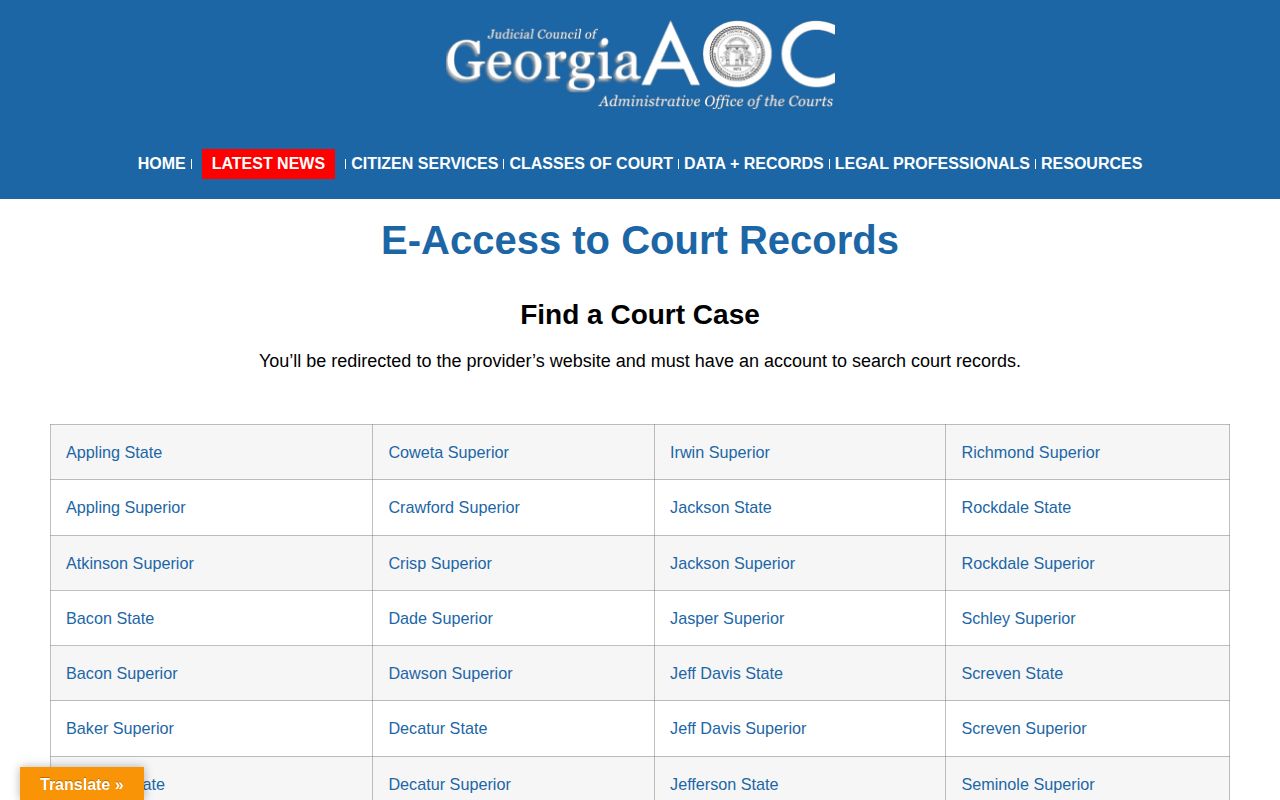
The directory gets you into the right court system. The clerk hands you the actual case file and its outcome. That outcome is what a court record is for. A news clip, a private archive, a booking photo, or a calendar line can't tell you how a charge resolved. Chattahoochee County's court path can keep running long after release, even in cases where no roster page ever existed.
- Booking
- The intake record created after arrest or transfer into a custody process.
- Arraignment
- A court event where charges and rights are addressed; it is not a finding of guilt.
- Bond
- A release condition that may include money, a surety, or other court terms.
- Disposition
- The court's recorded outcome, such as dismissal, acquittal, plea, or conviction.
- Record restriction
- A Georgia process that limits dissemination of eligible criminal-history information without erasing every copy.
Which Chattahoochee Court Holds the Case?
Figuring out which court has your case starts with the charge. Chattahoochee County's clerk serves Superior, Juvenile, and Magistrate functions, while Probate handles misdemeanor traffic. Superior Court sits within the six-county Chattahoochee Judicial Circuit. A booking label alone won't tell you which docket carries the result, so let the case number and charge type steer your next call.
The clerk is at 379 Broad Street, P.O. Box 120, Cusseta, GA 31805, phone 706-989-3424. The courthouse page lists Magistrate at 706-989-3643 and Probate at 706-989-3603. Hours and fax numbers differ between local pages, so confirm the division and its current instructions before you visit or order anything certified.
The routing matters most after a release. Current custody may be confirmed somewhere else entirely, but the clerk remains the source for the legal outcome.
Why Some Chattahoochee County Records Stay Withheld
Georgia keeps much of its arrest-related material closed. Juvenile records are the clearest example. They are generally shut to public inspection. Only narrow exceptions exist, covering adult transfers, public hearings, security concerns, or court orders. The Department of Juvenile Justice typically will not confirm youth custody or hand over photographs. Nobody should be steered toward any collection of juvenile images.
Other walls exist too. Victim-identifying details, medical data, protected identifiers, active investigations, security material, sealed files, and restricted dissemination can all be withheld. A requester can still ask for whatever portion is public. When something is redacted or denied, ask the custodian to separate the withheld material and to cite the exact legal basis.
Chattahoochee Custody Alerts and Federal Checks
Chattahoochee County has no sheriff's booking alert, custody text feed, or agency app to lean on. For statewide custody notification, Georgia VINE offers that layer through VINE, though you'll need to confirm participation and the specific facility record. VINE tells you custody status. It won't show photos or court outcomes. The sheriff's sex-offender email notice is a separate registry channel, unrelated to recent arrests.
Federal custody is a different world. The BOP locator form finds federal inmates but publishes no inmate photographs. ICE's Online Detainee Locator covers eligible immigration detention, not ordinary county bookings. The U.S. Marshals Service handles federal warrants, yet a task-force page is not a Chattahoochee warrant database.
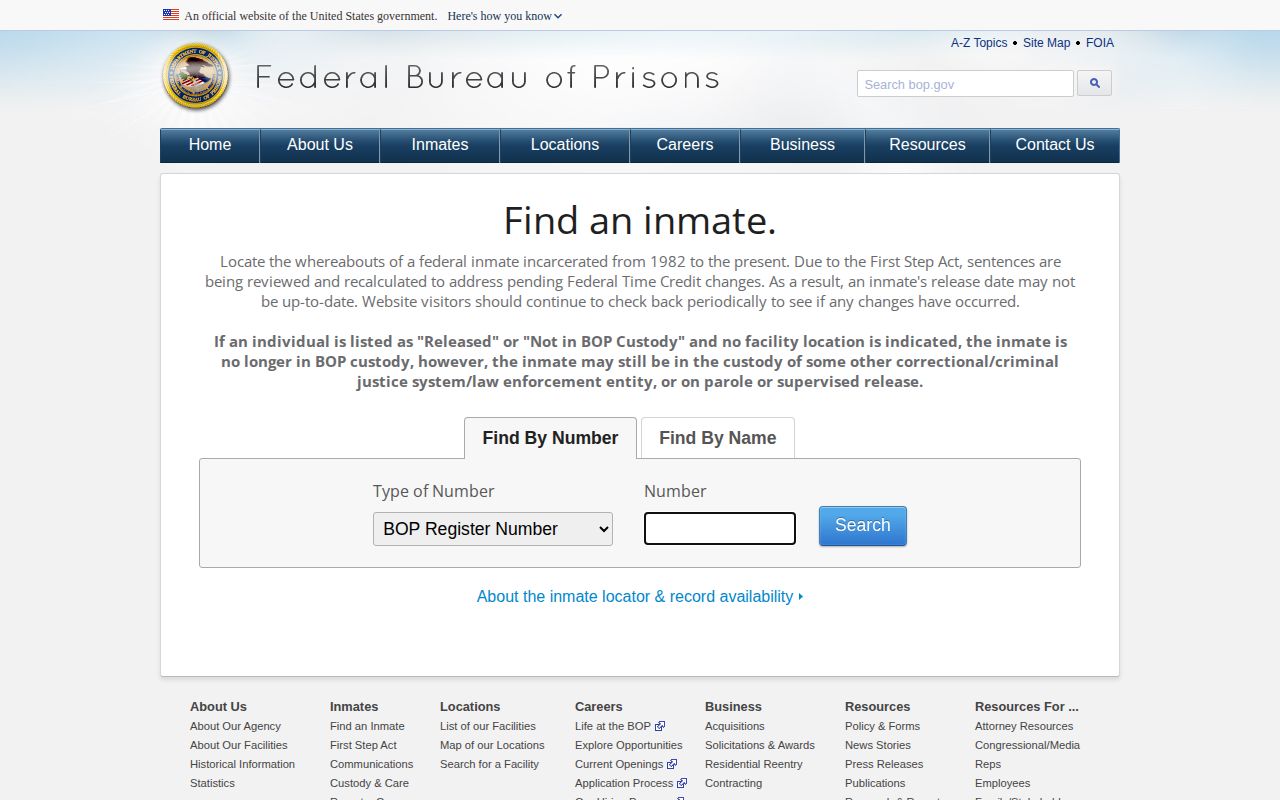
Match the tool to the custody situation. A county booking record, a state-prison profile, a federal locator hit, and an immigration custody result are four different animals, each with its own photo policy.
How Long Chattahoochee County Records Remain
How long does a Chattahoochee County booking record stick around? The Georgia Archives sets the floor. Its local-government schedules spell out the minimums. Jail booking records stay for at least ten years after release. Inmate case files get the same ten-year minimum. Jail registers last ten years past the final entry. Incarceration lists carry a shorter minimum, while certain incident and capital-investigation series run longer still.
Booking photographs get no separate label in the schedule. Reading a booking photo as associated booking data is an inference drawn from the intake-photo rule, nothing more. CCSO can tell you which series governs a given image. One more wrinkle exists: modern local records do not drift to the state archives just because a minimum has passed. For historical requests, the sheriff's office remains the first stop.
Three separate clocks are worth keeping apart. A custody display can vanish at release. The agency's own file can persist under its scheduled minimum. A private copy or news article follows whatever policy its owner chooses. The Georgia Archives sheriff and jail schedule lays out all of these retention categories.
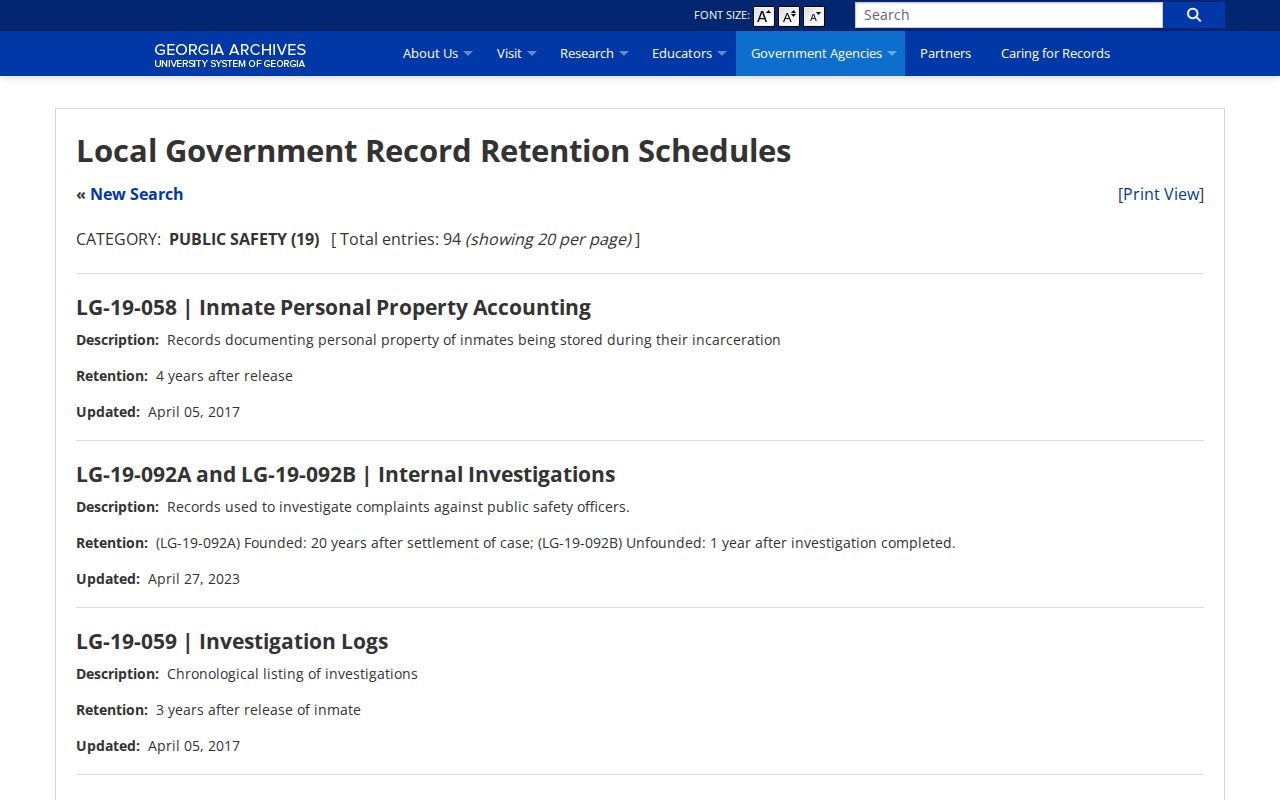
Sometimes a custodian will say a file moved elsewhere. Ask for the accession or catalog identifier. Then take that number through the archives reference route. A file destroyed under an approved schedule is a different matter. Its absence tells you nothing about the underlying case.
Busted Mugshots by City in Chattahoochee County
One incorporated city anchors this county map. Cusseta serves as the consolidated city-county seat, and no separate Cusseta police department appears in the official inventory. The sheriff's office covers law enforcement countywide. A Cusseta arrest follows the same Open Records request and custody-confirmation path used everywhere else in Chattahoochee County.
Cusseta Busted Mugshots
There is no separate city blotter or photo roster to check. Call CCSO first. Confirm which facility received the person. Then direct your booking-record or photo request to that responsible custodian.
The 2020 Census counted 9,565 residents in the consolidated entity. A later QuickFacts estimate reflects a different vintage. So the two numbers should not be compared directly. Population size has no bearing on where an arrest gets booked. Fort Moore is a federal installation and census-designated area, not a second incorporated city on this county map.